How to Read a Chain of Title in 20 Minutes: A Practical Guide
James K. Quigg
Author, Tax Deed Investing Guide
What Is a Chain of Title?
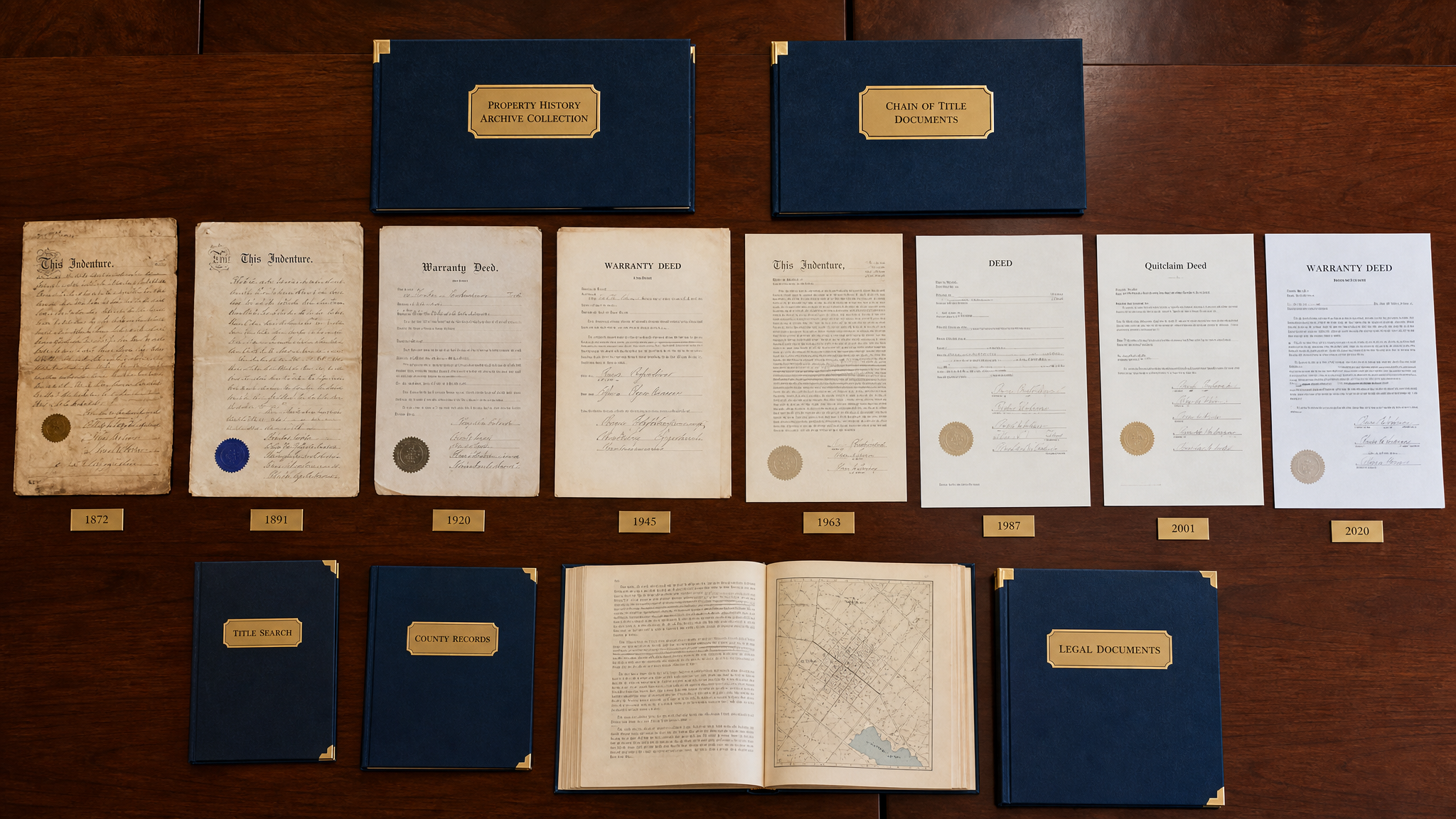
A chain of title is the sequential history of ownership for a specific piece of real property. Think of it as a family tree for the property — it shows every person or entity that has ever owned it, and every significant legal event that has affected it.
For tax deed investors, the chain of title reveals:
- Whether the current tax sale is legally valid
- What liens and encumbrances exist
- Whether there are competing ownership claims
- Potential quiet title complications
Where to Find Chain of Title Records
Most chain of title research begins at the county recorder's office (sometimes called the register of deeds, clerk's office, or land records office). Many counties now have online portals, but the quality and completeness of online records varies dramatically.
Pro tip: Online records typically go back 15–20 years at most. For a thorough search, you may need to visit the recorder's office in person or use a title plant.
Step-by-Step: Reading a Chain of Title
Step 1: Start with the Current Owner
Pull the most recent deed recorded for the property. This tells you:
- Who currently owns the property (the grantee on the deed)
- Who transferred it to them (the grantor)
- When the transfer occurred
- What type of deed was used (warranty deed, quitclaim deed, special warranty deed)
Red flag: If the most recent deed is a quitclaim deed, the grantor was making no warranties about the title. This often indicates a family transfer, a divorce settlement, or an attempt to clear a title defect.
Step 2: Work Backwards
Using the grantor from the current deed, search for the previous deed where that person was the grantee. Repeat this process, working backwards through time.
You are building a chain: Owner A → Owner B → Owner C → Owner D (current)
Step 3: Check Each Link
For each transfer in the chain, verify:
- The deed was properly signed and notarized
- The legal description is consistent across all deeds
- There are no gaps in time between transfers
- The grantor on each deed was actually the owner at that time
Step 4: Search for Encumbrances at Each Link
For each owner in the chain, search for:
- Mortgages or deeds of trust they granted
- Satisfaction or release documents for those mortgages
- Judgment liens filed against them
- Federal or state tax liens
- Mechanic's liens from contractors
Step 5: Identify Problems
Common chain of title problems include:
- Breaks in the chain — a gap where ownership transfer cannot be traced
- Wild deeds — a deed from someone who doesn't appear to have owned the property
- Unreleased mortgages — paid-off mortgages where the release was never recorded
- Estate issues — an owner died without probate, creating unclear succession
- Forged or defective deeds — signatures that don't match, missing notarization, incorrect legal descriptions
The 20-Minute Approach
For a preliminary assessment (not a full title examination), here is how to evaluate a chain of title efficiently:
- Minutes 1–5: Pull the current deed and identify the chain back 20 years
- Minutes 5–10: Check for federal tax liens and judgment liens against each owner
- Minutes 10–15: Verify all mortgages have corresponding releases
- Minutes 15–20: Check for any lis pendens, bankruptcy filings, or code liens
This gives you a quick preliminary risk read. If anything looks problematic, invest in a full professional title examination before bidding.
When to Call a Professional
If you find any of the following, stop and consult a professional title examiner:
- Breaks in the chain of title
- Federal tax liens
- Active bankruptcy filings
- Estate or probate issues
- Multiple quitclaim deeds in succession
- Any transfer involving a trust or corporation you cannot verify
Sources & Primary References
Legal statements in this article are grounded in the primary sources below. Statutes and agency rules change — always confirm the current text with the official source and, for a specific property, consult a licensed attorney or title professional.
- Texas Property Code, Chapter 22 (Trespass to Try Title)
- Texas Civil Practice & Remedies Code, Chapter 16 (Limitations / Adverse Possession)
- PACER — U.S. Federal Court / Bankruptcy Records
Reviewed by James K. Quigg. Spotted an error? Report it here.
Last reviewed August 9, 2026Free 7-Document Due Diligence Bundle
Get the printable checklists, worksheets, and reference guides mentioned in this article — completely free.
Want the Complete System?
This article covers one piece of the puzzle. The book gives you the entire due diligence system — 163 pages of practical due diligence guidance.
Get the Book