Environmental Due Diligence for Tax Deed Properties: Avoiding Hidden Liability
James K. Quigg
Author, Tax Deed Investing Guide
Why Environmental Risk Is Different
Most risks in tax deed investing are financial — you lose money. Environmental contamination risk is different because:
- Liability follows the land. Under CERCLA (the Comprehensive Environmental Response, Compensation, and Liability Act), you can be held responsible for cleanup costs simply because you own the property — even if the contamination occurred decades before you bought it.
- Costs can be catastrophic. A leaking underground storage tank can cost $50,000–$500,000 to remediate. Soil contamination from industrial use can run into the millions.
- It is not covered by title insurance. Even with a quiet title action and full title insurance, environmental contamination is specifically excluded from coverage.
What CERCLA Means for Tax Deed Investors
CERCLA establishes "strict, joint, and several liability" for environmental contamination. In plain English, this means:
- Strict: You are liable regardless of fault. It does not matter that someone else caused the contamination.
- Joint and several: If there are multiple responsible parties, any single party can be held responsible for the entire cleanup cost.
- Current owner liability: The current owner of a contaminated property is a "potentially responsible party" (PRP) under CERCLA.
There is a limited "innocent landowner" defense, but it requires proving you conducted "all appropriate inquiries" before acquiring the property. For tax deed investors, this means conducting environmental due diligence before you bid.
The Red Flags Checklist
Before spending money on a Phase I assessment, screen properties for these environmental red flags:
Property History Red Flags
- Gas stations (current or former) — underground storage tanks are the #1 source of contamination at tax deed auctions
- Dry cleaners — perchloroethylene (PERC) contamination is extremely common and expensive to remediate
- Auto repair shops — oil, solvents, and chemical disposal issues
- Industrial or manufacturing use — any prior industrial activity warrants investigation
- Agricultural use — pesticide contamination, especially in older farming areas
- Printing operations — solvent and chemical waste
- Adjacent to railroads — creosote and chemical contamination from rail operations
Visual Red Flags
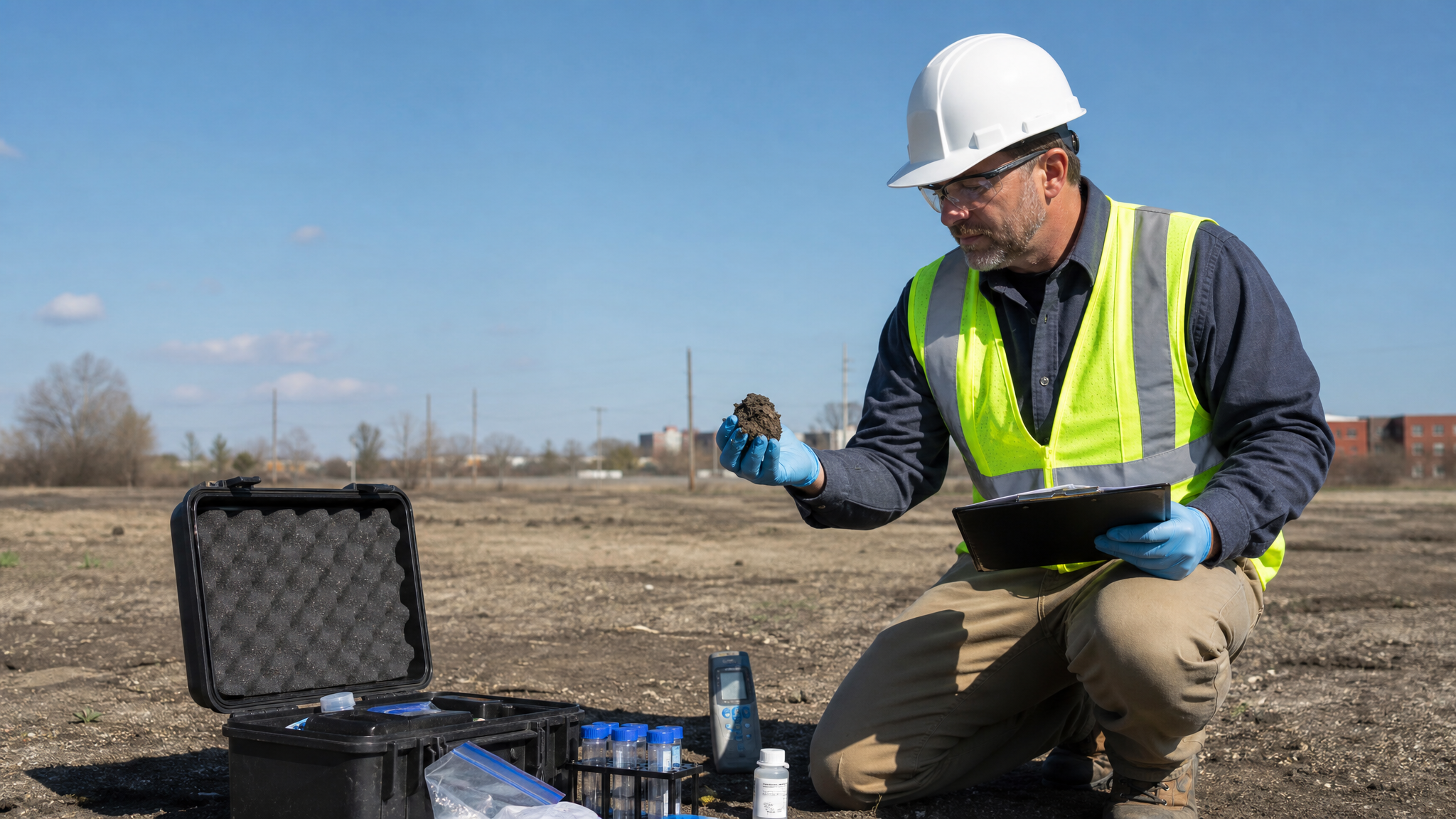
- Stained or discolored soil
- Dead vegetation in unusual patterns
- Visible fill pipes, vents, or tank caps in the ground
- Abandoned drums, barrels, or containers
- Unusual odors (petroleum, chemical, solvents)
- Evidence of dumping or waste disposal
Records Red Flags
- EPA Superfund or brownfield listing
- State environmental agency records
- Underground storage tank (UST) registration records
- Open violation or enforcement actions
- Environmental liens recorded against the property
Phase I Environmental Site Assessment
If any red flags exist, a Phase I Environmental Site Assessment (ESA) is the standard of care. This is a professional investigation conducted by an environmental consultant that includes:
What Is Covered
- Historical review: Aerial photographs, fire insurance maps, city directories, and building department records going back to the property's first development
- Regulatory database search: EPA, state, and local environmental databases for any reported contamination or violations within a set radius
- Site inspection: Walk-through of the property looking for evidence of current or past contamination
- Interviews: Conversations with current occupants, neighbors, and local officials
What It Costs
- Residential property: $1,500–$3,000
- Small commercial property: $2,500–$5,000
- Large or complex sites: $5,000–$10,000+
What It Does NOT Include
A Phase I is a records review and visual inspection only. It does not include any actual testing of soil, water, or air. If the Phase I identifies potential contamination, a Phase II assessment (which involves physical sampling and laboratory testing) is recommended. Phase II assessments cost $5,000–$25,000+.
When to Walk Away
My general guidance:
- Any former gas station or dry cleaner: Walk away unless you have significant environmental remediation experience and budget
- Any property with a registered UST: Walk away unless the tank has been properly closed with documentation
- Any EPA Superfund or brownfield listing: Walk away — period
- Industrial properties without Phase I: Never bid without a Phase I, regardless of the deal
- Phase I reveals "recognized environmental conditions": Do not proceed without a Phase II and cost estimate
Protecting Yourself
Before the Auction
- Screen every property against the red flags checklist
- Search EPA and state environmental databases (many are free online)
- Check for environmental liens in the county records
- Order a Phase I for any commercial property or any property with red flags
- Add environmental contingency to your Maximum Bid Formula
After the Auction
If you discover environmental issues after purchasing:
- Contact an environmental attorney immediately
- Do not disturb the contamination — this can increase your liability
- Report the contamination to the appropriate state agency
- Explore the "innocent landowner" defense under CERCLA
- Consider whether remediation costs make the investment viable
The Environmental Quick Reference
Our free 7-Document Due Diligence Bundle includes an Environmental Due Diligence Quick Reference card that covers the screening process, database search links, and Phase I assessment checklist. Download it as part of your pre-bid preparation.
Sources & Primary References
Legal statements in this article are grounded in the primary sources below. Statutes and agency rules change — always confirm the current text with the official source and, for a specific property, consult a licensed attorney or title professional.
- CERCLA — 42 U.S.C. § 9601 et seq. (Superfund)
- EPA — All Appropriate Inquiries (Phase I ESA standard)
- EPA — Superfund Liability
- ASTM E1527-21 — Standard Practice for Phase I Environmental Site Assessments
Reviewed by James K. Quigg. Spotted an error? Report it here.
Last reviewed August 9, 2026Free 7-Document Due Diligence Bundle
Get the printable checklists, worksheets, and reference guides mentioned in this article — completely free.
Want the Complete System?
This article covers one piece of the puzzle. The book gives you the entire due diligence system — 163 pages of practical due diligence guidance.
Get the Book